
Greyhound Welfare in UK Racing — Injury Data, Retirement Stats and the Debate
 Available in US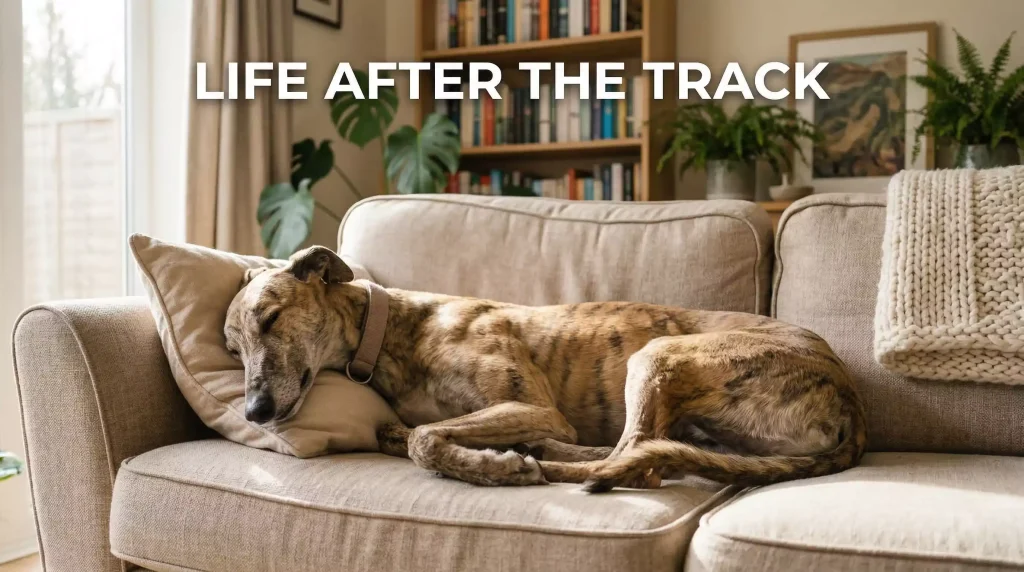
The data has improved markedly since 2018, when the GBGB began publishing detailed annual injury and retirement reports. Before that, the industry’s reluctance to release figures drew sharp criticism from Parliament and animal welfare groups alike. The fact that seven years of comprehensive data now exists is itself a significant development — and understanding that data is the starting point for any serious conversation about greyhound welfare.
The legislation it has produced is in the racing ban.
Injury Rates — Seven Years of GBGB Data
Since 2018, the GBGB has published annual data on injuries sustained by greyhounds at licensed UK tracks. The most recent report, covering 2026, recorded 3,809 injuries from 355,682 individual runs — an injury rate of 1.07%, which the governing body describes as a historic low. That means roughly one injury for every ninety-three runs, across all types of injury from minor strains to serious fractures.
The trend is downward. In 2018, the first year of published data, the injury rate was higher, and the raw numbers were larger in proportion to the number of runs. Year-on-year improvements have been incremental rather than dramatic, but the cumulative effect over seven years is significant. The GBGB attributes the decline to a combination of track maintenance improvements, veterinary protocols, race-day welfare inspections, and the introduction of the Injury Recovery Scheme.
Critics point to the cumulative toll. Aggregate data compiled by GREY2K USA Worldwide shows that between 2017 and 2026, GBGB-licensed tracks recorded a total of 35,168 injuries, including 1,353 deaths on the track itself. An additional 3,278 dogs were euthanised for other reasons during the same period. These are large numbers, and presenting them in cumulative form — rather than as an annual rate — gives a different impression of the same underlying data.
Both presentations are factually accurate. The GBGB’s annual rate tells you that the likelihood of a dog being injured in any given race is low and getting lower. The cumulative total tells you that the absolute number of dogs affected over multiple years is substantial. Which framing you find more compelling depends on your perspective, but neither is dishonest — they are simply answering different questions. A 1.07% injury rate sounds manageable in isolation; 35,168 injuries over eight years sounds like a systemic problem. The data is the same — the framing is not.
One nuance worth noting: the GBGB’s data covers only licensed tracks. Independent or unlicensed venues — of which there are very few in the UK, following the closure of Scotland’s Thornton track — are not captured in these figures. The Scottish Animal Welfare Commission’s report on Thornton found considerably higher injury and fatality rates at that unlicensed venue, suggesting that the GBGB licensing framework, whatever its limitations, does correlate with lower welfare risks.
Fatalities on Track — Declining Rate, Persistent Numbers
The fatality data follows a pattern similar to the injury data — a declining rate, but numbers that remain uncomfortable for anyone who cares about animal welfare. The GBGB reports that the track fatality rate fell from 0.06% in 2020 to 0.03% in 2026, meaning that roughly three dogs in ten thousand runs died on the track in the most recent year of data. That halving of the rate is presented by the GBGB as evidence that safety interventions are working.
The absolute numbers tell a harsher story. According to Dogs Today Magazine, 123 greyhounds died on GBGB-licensed tracks in 2026 — the highest single-year total since 2020. A further 223 dogs died off-track from causes linked to racing, bringing the total to 346 racing-related deaths in a single year. The apparent contradiction — a lower rate but a higher absolute number — is explained by the volume of racing: more races were run in 2026 than in previous years, so even at a lower rate, the total count can increase.
Dr Sam Gaines, Head of Companion Animals at the RSPCA and Chair of the Cut The Chase coalition, frames the issue differently. “Even if these issues had been resolved, there is the undeniable truth that greyhounds racing around an oval track at high speed is inherently dangerous and puts them at risk of predictable, avoidable and unnecessary injury and death,” Gaines said in a December 2026 statement. For campaigners in the RSPCA’s camp, no reduction in the rate addresses the fundamental problem: the activity itself creates the risk.
For the GBGB, the counter-argument is one of proportionality. No sport involving animals is risk-free. Horse racing, show jumping, and eventing all produce fatalities. The relevant question, in the governing body’s view, is whether the risks are managed responsibly, whether the trend is moving in the right direction, and whether the data is published transparently. On all three counts, the GBGB argues it is performing well. The volume of racing — more than 355,000 individual runs at licensed tracks in 2026 alone — means that even a very low fatality rate translates to a non-trivial number of deaths. Whether that argument satisfies critics — or the public — is a separate question entirely.
Retirement and Rehoming — The 94% Figure
The headline retirement statistic from the GBGB is that 94% of greyhounds leaving the racing population in 2026 were successfully rehomed or retained — a total of 5,795 dogs. That figure has risen steadily from 88% in 2018, and the breakdown reveals the routes they take: 27.1% were kept by their owners or trainers, 55.8% went through rehoming charities, and 11.0% were recorded under other outcomes.
The economic euthanasia figure is the one that draws the most attention — and the most dramatic improvement. In 2018, 175 greyhounds were put to sleep because their owners or trainers chose not to fund their ongoing care or rehoming. By 2026, that number had fallen to three. A reduction of 98% is striking by any standard, and it reflects both tighter GBGB regulations on end-of-career responsibility and the increased capacity of rehoming organisations.
The Greyhound Trust, the largest breed-specific rehoming charity in the UK, processes a substantial share of retired racers. Other charities — Retired Greyhound Trust branches, independent rescue organisations, and breed-specific adoption groups — account for the remainder. The process typically involves a health assessment, a period of fostering or acclimatisation to a home environment, and matching with an adoptive household. Greyhounds, despite their racing image, are generally calm, low-energy house dogs that adapt well to domestic life — a fact that surprises many first-time adopters who expect a hyperactive athlete and find themselves with a creature that wants nothing more than a warm sofa and two twenty-minute walks a day.
Not everyone accepts the 94% figure at face value. Critics note that the category “other outcomes” — accounting for the remaining percentage not covered by owner retention, charity rehoming, or economic euthanasia — is vaguely defined and could include dogs whose fate is not formally tracked after they leave the racing system. The GBGB’s tracking mechanism relies on trainers and owners reporting outcomes, and any system based on self-reporting has inherent limitations.
Nevertheless, the direction is clear. More dogs are being rehomed, fewer are being euthanised for economic reasons, and the infrastructure supporting post-racing life has expanded considerably since 2018. Whether this progress is sufficient — or whether the very existence of thousands of dogs needing rehoming each year is itself an indictment of the sport — depends on where you stand in the wider debate.
How Welfare Is Funded — IRS and BGRF
Welfare programmes in UK greyhound racing are funded through two main channels: the Injury Recovery Scheme (IRS) operated by the GBGB, and the British Greyhound Racing Fund (BGRF), which collects a voluntary levy from bookmakers.
The IRS provides veterinary treatment for greyhounds that suffer career-ending injuries on the track. Rather than leaving the financial burden with the owner or trainer — who might otherwise face the choice between expensive treatment and euthanasia — the IRS covers the cost of surgery and rehabilitation. Since its launch in December 2018, the scheme has disbursed nearly £1.5 million in veterinary funding. That figure is directly linked to the decline in economic euthanasia: when treatment is funded, fewer dogs are put down because their injuries are too expensive to fix.
The BGRF’s role is broader. It collects a voluntary contribution from bookmakers equivalent to 0.6% of their greyhound betting turnover and distributes the funds across the sport — prize money, track maintenance, integrity services, and welfare. In the 2026-25 financial year, BGRF income totalled £6.75 million, down from £7.3 million the year before. The long-term trend is worse: at its peak, the levy generated between £10 million and £14 million annually in real terms, with one exceptional year exceeding £20 million. The percentage has not been increased since 2009, and falling betting turnover has compounded the decline.
More than three quarters of the BGRF’s income goes directly to welfare and integrity programmes, according to the GBGB. But the shrinking revenue base raises questions about sustainability. If the levy continues to decline at its current pace, the sport will face a genuine funding crisis — one that affects not just welfare but the entire infrastructure of licensed greyhound racing in the UK. The argument for a statutory levy, which would compel all bookmakers offering greyhound betting to contribute rather than relying on voluntary participation, has gained ground in recent years. Horse racing already benefits from a statutory levy, and greyhound racing advocates argue the same principle should apply to their sport.
The GBGB has also published a series of welfare strategy documents through its publications page, including “A Good Life for Every Greyhound” and periodic progress reports. These lay out the governing body’s welfare targets and its self-assessment of progress. Whether these documents represent meaningful accountability or mere public relations depends, again, on your perspective — but their existence, and their level of detail, is a significant departure from the opacity that characterised the sport before 2018.
The full picture is in tonight’s greyhound results.
The Legislative Push — Wales, Scotland, and Beyond
The welfare debate moved from campaigning to legislation in 2026, when two devolved parliaments took concrete steps toward banning greyhound racing within their jurisdictions.
In December 2026, the Senedd — Wales’ parliament — voted 36 to 11, with three abstentions, in favour of the general principles of the Prohibition of Greyhound Racing (Wales) Bill. If enacted, the ban would take effect no earlier than 1 April 2027 and no later than 1 April 2030. The legislation would make it an offence to hold or promote a greyhound race on an oval track in Wales, directly affecting Valley Stadium — the country’s sole licensed track.
In Scotland, Mark Ruskell MSP introduced the Greyhound Racing (Offences) (Scotland) Bill in April 2026, which would prohibit oval-track greyhound racing in Scotland. Although Scotland currently has no GBGB-licensed tracks, the bill is framed as a preventive measure and a statement of principle — intended to ensure that commercial greyhound racing cannot establish or re-establish itself north of the border. The Scottish Animal Welfare Commission’s 2023 report on greyhound welfare at the Thornton track — which found an injury rate of 0.35% and a fatality rate of 0.176%, both significantly higher than at GBGB venues — provided evidential support for the legislative push.
Neither bill has yet received final parliamentary approval, and both face committee scrutiny, amendment stages, and potential political complications. But the direction of travel is clear: devolved governments in the UK are taking welfare arguments seriously enough to pursue outright bans, and the GBGB’s response — that the data shows improvement and that bans are disproportionate — has not been sufficient to halt the legislative process.
England, where all eighteen licensed tracks are located, has not pursued similar legislation. The UK Parliament debated greyhound welfare as recently as 2016, when the EFRA Committee criticised the industry’s data transparency, but no ban legislation has been tabled in Westminster. Whether the Welsh and Scottish precedents will change that calculus remains to be seen.
What Both Sides of the Debate Argue
The welfare debate in UK greyhound racing is not a simple binary, but it does tend to crystallise around two opposing positions, each with its own evidence base and its own rhetorical framing.
The GBGB and its supporters argue that licensed greyhound racing in the UK has made substantial, measurable progress on welfare since 2018. Injury rates have fallen to historic lows. The fatality rate has halved. Economic euthanasia has been virtually eliminated. The retirement rate has risen to 94%. Data is published annually and is more detailed than at any previous point in the sport’s history. Track investment continues, with Dunstall Park representing a significant commitment to the future. In this framing, greyhound racing is a regulated sport that takes welfare seriously, responds to criticism with action, and subjects itself to public scrutiny through transparent data reporting.
The opposition — led by organisations including the RSPCA, Dogs Trust, and the international campaign group GREY2K — argues that no amount of improvement addresses the fundamental problem: greyhound racing is inherently dangerous, and the injuries and deaths it produces are avoidable because the activity itself is optional. Lisa Morris-Tomkins, Chief Executive of the Greyhound Trust, put it plainly: “The number of racing greyhounds who never have the opportunity to experience a loving home when their racing career is over is unacceptable, and the base line injury and retirement figures published must be improved.” The Greyhound Trust occupies an interesting position in this debate — it exists to rehome racing dogs, which means it is both a product of the industry and a voice calling for better standards within it.
Between these poles lies a range of positions. Some people accept that greyhound racing carries inherent risks but believe those risks can be managed to an acceptable level, much as they are in horse racing or other animal sports. Others support the sport in principle but are troubled by specific aspects — the volume of BAGS racing, the economic model that depends on bookmaker funding, the long-term sustainability of a system that produces thousands of dogs requiring rehoming each year. Still others have no strong position on the ethics and simply want to understand the facts before forming a view.
What is not in dispute is that the landscape is changing. Legislative action in Wales and Scotland, sustained campaigning pressure from welfare organisations, and shifting public attitudes toward animal sports are all applying pressure that the industry has not faced before at this intensity. The GBGB’s response — more data, more transparency, more welfare spending — may prove sufficient to preserve the sport in England, or it may not. The answer will depend on whether the improvements in the numbers are seen as evidence of a responsible industry or as proof that the underlying problem is too large to manage.
For anyone reading tonight’s results with an awareness of these issues, the welfare context adds a layer of meaning to every fixture. The dogs on your screen are athletes with careers, and those careers have endpoints that the sport is increasingly being asked to account for. Understanding the debate — its data, its arguments, its legislative trajectory — makes you a more informed follower of greyhound racing, regardless of which side you find more persuasive.
