Romford Greyhound Results Tonight — Races, SPs and Key Stats From London Stadium
 Available in US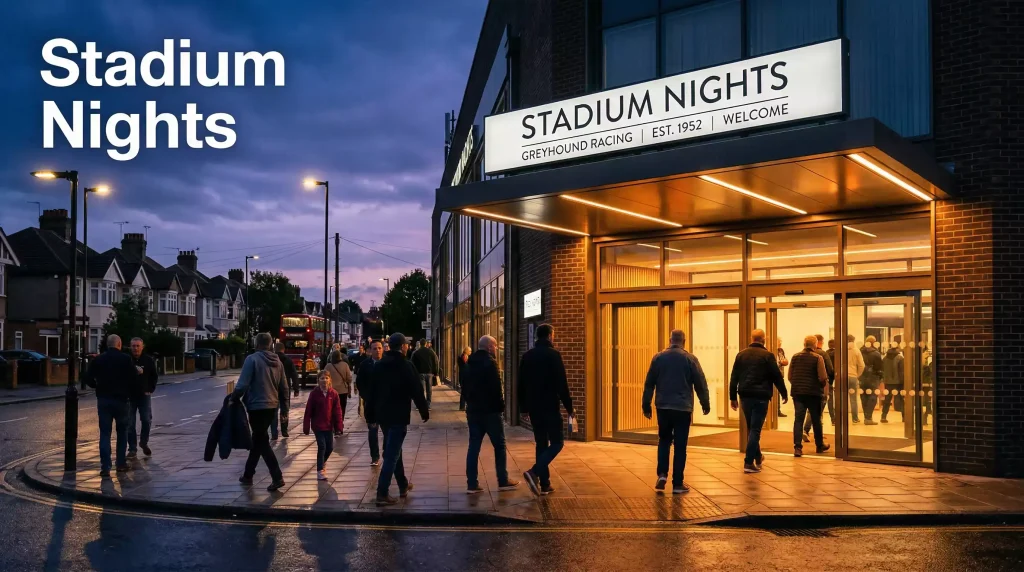
Romford greyhound results tonight come from one of the busiest and most consistently programmed tracks in the country. Racing three evenings a week from its stadium in Essex, Romford is London’s busiest track for BAGS fixtures and a staple of the evening schedule for bettors who follow UK greyhound racing with any regularity.
The stadium sits in the London Borough of Havering and has been running greyhounds for decades, surviving the waves of closures that have reduced the national circuit from dozens of tracks to the 18 currently licensed by the GBGB. Romford’s endurance owes something to geography — it serves a dense catchment area in east London and Essex — and something to its schedule, which delivers a reliable supply of evening racing that keeps both on-course and off-course markets ticking.
Tonight’s results from Romford will follow the same format as any licensed UK meeting: winners, finishing times, SPs, forecast and tricast dividends, and race comments for every runner. What varies from track to track is the character of the racing itself — the distances, the track geometry, the biases that emerge from how the bends and the run to the first turn are configured. That is what this guide covers.
The south-coast card is Hove.
Romford Stadium — Distances, Surface, and Race Nights
Romford operates on a circuit that offers three main distances: 225 metres (sprint), 400 metres (standard), and 575 metres (stayers). The 400-metre trip is the bread and butter of the programme, making up the majority of races on any given evening card. The sprint distance is used selectively, often for specialist speedsters that lack the stamina for two full circuits, while the 575 provides the longer test for dogs with more endurance than raw pace.
The track surface is sand-based, as is standard across almost all UK greyhound stadiums. Surface conditions can vary with weather — a heavy downpour before racing can make the going slow, which tends to suit dogs that rely on power rather than pure speed — but Romford’s drainage is generally efficient enough to keep conditions consistent through most meetings. The going is announced before racing begins and applies to the entire card unless conditions change mid-meeting.
Race nights at Romford follow a dependable weekly pattern. The stadium typically hosts evening meetings on Wednesday, Friday, and Saturday — three nights that make it one of the most frequently used tracks in the London area. Additional daytime meetings on Monday, Tuesday, and Saturday morning round out a schedule of six fixtures per week. Evening first race times are usually around 18:57 or 19:12 depending on the night, with the final race wrapping up before 22:00. Each meeting runs the standard 12 races, spaced at approximately 15-minute intervals, giving the card a total runtime of around three hours.
The busy weekly schedule means Romford generates a substantial volume of data. Over a typical week, the track produces six meetings’ worth of results, form data, and trap statistics — more than 70 races. For bettors who specialise in a single venue — a common and often effective approach — Romford offers enough racing to build a detailed understanding of how the track plays without needing to look elsewhere.
Romford is also a popular venue for on-course attendance, partly because of its accessibility. The stadium is close to Romford railway station, within easy reach of central London, and the evening meeting format suits a post-work outing. The atmosphere is livelier than at many daytime BAGS meetings, with a bigger crowd creating genuine trackside noise — something that can affect how dogs behave in the traps and on the first bend, though the impact is difficult to quantify.
What to Expect From Tonight’s Romford Card
A typical evening card at Romford runs 12 races — the standard fixture length across all UK BAGS meetings, which collectively deliver a minimum of 42 fixtures every week through the SIS schedule. Most of the races will be graded — A1 through to A7 or lower, depending on the quality of dogs available — with one or two open races or special events mixed in on busier nights.
The grading system means that each race on the card is designed to be competitive, matching dogs of roughly similar ability against each other. A strong A2 race will feature quicker dogs and tighter finishes than an A6, but both should produce a genuine contest. For bettors, this means the form book is more reliable than it might appear at first glance: dogs tend to stay within their grade range for several runs, and an A4 performer that suddenly drops to A6 is often the first place to look for a short-priced winner.
Intervals between races are long enough to review the result, check the next racecard, and place a bet — but only just. If you are following another track simultaneously, the windows tighten further. Romford’s race times are staggered against other evening meetings to minimise direct overlap, but on a busy night with three concurrent fixtures, you will inevitably face moments where two races go off within a minute of each other. Fast results and live feeds become essential navigation tools in those spots.
The wider context is set out in tonight’s greyhound results.
Key Competitions and Track Characteristics
Romford’s most distinctive feature is its tight bends. The track circumference is relatively compact, which means the turns come up quickly and are sharper than at larger venues like Nottingham or Newcastle. This has a direct impact on how races unfold: dogs that break fast and find the rail early have a significant advantage, because the tight geometry punishes runners who are slow to the first bend or who drift wide under pressure.
This is where trap draw becomes particularly relevant. Across UK tracks as a whole, Trap 1 — the innermost box — wins at roughly 18 to 19 per cent, above the theoretical 16.6 per cent you would expect if all traps were equal. At Romford, that inside advantage is amplified by the track layout. The run from the traps to the first bend is short, and the bend itself is tight enough that an inside runner can establish position before wider-drawn dogs have time to cross over. Bettors who ignore the trap draw at Romford are ignoring one of the most predictable edges available.
The stadium has hosted a range of open races and invitational events over the years, though it is not primarily known as a flagship competition venue in the way that Nottingham or the former Perry Barr were. Romford’s strength lies in its consistency: it delivers a high volume of well-structured graded racing, night after night, with a punter-friendly schedule and a track character that rewards preparation. The big-money events happen elsewhere, but the bread and butter of UK greyhound betting runs through stadiums like this one.
For anyone new to Romford, the key things to note are the inside trap advantage, the premium on early pace, and the fact that the 400-metre standard distance is by far the most commonly run trip. Build your analysis around those three facts and you will have a working framework for tonight’s card — and every card that follows. The results will confirm whether the patterns held, and over time, that confirmation is what turns a hunch into a method.
