Crayford Greyhound Results — A Look Back at the Stadium Before Closure
 Available in US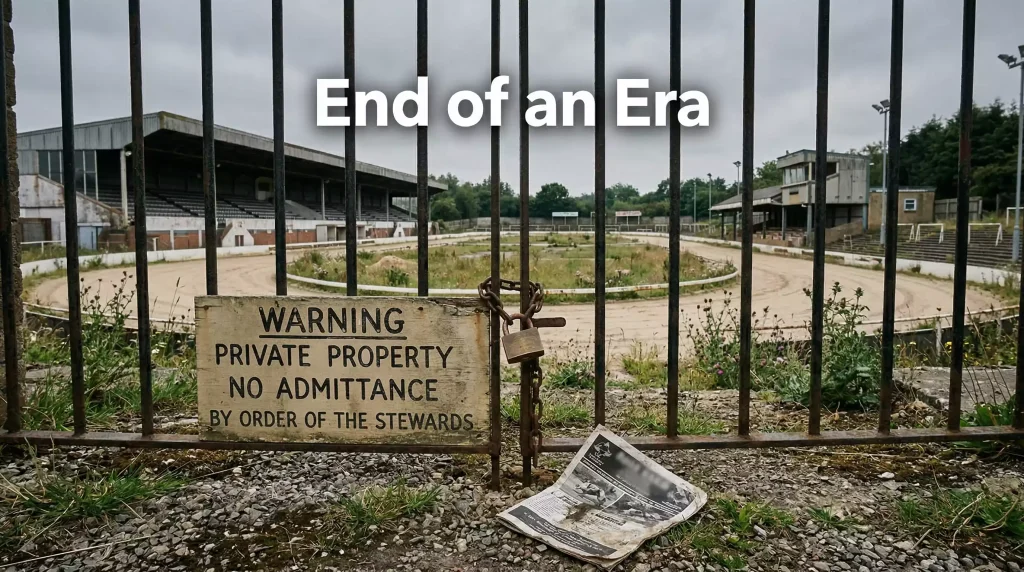
Crayford greyhound results are now a matter of archive rather than live data. The stadium in Dartford, Kent, closed in 2026 — one of three UK tracks to shut their gates during what was supposed to be the sport’s centenary celebration year. Searching for Crayford results today means looking backwards, but looking backwards at this track tells a story worth knowing: decades of south-east London racing, a loyal fanbase that showed up through every downturn, and a closure that left a visible gap in the Kent sporting landscape.
Crayford was not the biggest or the most famous UK greyhound stadium. It did not host the Derby or draw national television audiences. But it was a working track that served its community consistently, providing evening and afternoon racing for bettors who lived within reach of the Dartford and Bexley area and contributing to the broader BAGS fixture schedule that kept the sport ticking over across the country. Its loss matters, not because it was exceptional, but because it was typical — and every time a typical track closes, the circuit shrinks further.
This article covers what Crayford meant to UK greyhound racing, why it closed, what the closure means for Kent, and where to find the historical results that the stadium left behind.
The other closure of recent years is Perry Barr.
Crayford’s Place in UK Greyhound Racing
Crayford Stadium opened in 1937, which placed it firmly in the first wave of UK greyhound venues built during the sport’s initial surge of popularity. By the late 1930s, greyhound racing was drawing enormous crowds across Britain — an affordable evening out for working-class communities who could not afford horse racing’s day-at-the-races price tag. Crayford served the south-east London and north Kent corridor, drawing spectators from Bexleyheath, Dartford, Erith, and the surrounding towns.
Over the following decades, the stadium operated through the sport’s peak years — when UK greyhound racing attracted tens of millions of spectators annually — through the long decline that followed the rise of television, the contraction of the betting shop network, and the growing competition from other leisure and gambling options. Crayford survived longer than many of its contemporaries. White City, Wimbledon, Catford, and Hall Green all closed before it, each removal shrinking the London and southern England circuit and concentrating the surviving fixture list among fewer venues.
By the 2010s, Crayford was one of a handful of tracks serving the Greater London area, running regular evening meetings under the Ladbrokes-associated Coral banner and contributing to the BAGS schedule that supplied live racing content to betting shops nationwide. The stadium’s atmosphere was unpretentious: a small grandstand, a functional bar, a track-side viewing area where regulars gathered on race nights with the familiarity of people who had been coming for years. It was never glamorous, but it was genuine — and for the trainers based in Kent, it was the closest track, the home venue, and the place where their dogs raced most often.
Crayford also served an important function in the broader grading ecosystem. Dogs that were not quite quick enough for the higher-graded meetings at Romford or Hove could find competitive races at Crayford, where the grading secretary assembled cards that matched the local pool of talent. This is a detail that rarely makes headlines but matters enormously to the day-to-day running of the sport: without enough tracks to accommodate the full range of canine ability, the grading system breaks down, and the quality of racing suffers across the board.
Why Crayford Closed — and What It Means for Kent
Crayford’s closure in 2026 was part of a broader contraction that saw three licensed UK stadiums — Crayford, Perry Barr in Birmingham, and Swindon — all close within the same year. The centenary of British greyhound racing, which should have been a moment of celebration, became instead a stark illustration of the sport’s ongoing decline in physical infrastructure. For every Dunstall Park that opened, three other venues shut — a net loss that dropped the total number of licensed GBGB stadiums to 18.
The reasons behind Crayford’s closure were not unique. The site, like many UK greyhound stadiums, occupied land in an area where property values had risen significantly over the decades. The economics of running a greyhound track — maintaining the surface, paying staff, meeting regulatory requirements, managing fixtures — require a revenue stream that betting turnover and modest gate receipts increasingly struggle to sustain. When the land beneath a stadium becomes worth more as housing or retail development than it generates as a sports venue, the commercial logic of closure becomes difficult to resist, regardless of the community’s attachment to the track.
For Kent, the impact was immediate. Trainers based in the county lost their closest racing venue and were forced to redirect their dogs to tracks further afield — primarily Romford and Hove, both of which involve longer journeys and higher transport costs. Dogs that had been graded and racing regularly at Crayford needed to be re-entered at other stadiums, where the grading pools and trap characteristics were different. The disruption was not catastrophic, but it was real: a reshuffling of racing routines that affected dozens of trainers and hundreds of dogs.
The closure also removed a fixture from the BAGS schedule, which meant one fewer evening meeting for the betting audience to follow. In a system that depends on volume — multiple simultaneous meetings generating continuous content for betting shops and online platforms — every lost fixture tightens the supply slightly. The remaining tracks absorb the gap, but the coverage becomes a fraction thinner, and the punters who had built their knowledge around Crayford’s form book were left starting from scratch at a different venue.
Mark Bird, the chief executive of GBGB, has spoken about the contrast between greyhounds and horse racing: “Most people would say that a horse doesn’t end up on your sofa at the end of its racing career. You’ve got halo charities, like the RSPCA and Dogs Trust, who have turned their back on greyhound racing, saying it’s a cruel and abhorrent sport. Yet, when you look at it, there are far fewer dogs put to sleep than horses in terms of the number of runs there are” (Gambling Insider). That philosophical question of how society values racing animals sits alongside the practical reality of stadium closures — both are part of the same conversation about the sport’s future.
The wider context is set out in tonight’s greyhound results.
Accessing Historical Crayford Results
Crayford may no longer generate live results, but its historical data remains accessible through the same platforms that archive results from every GBGB-licensed track. Timeform holds the most comprehensive commercial archive, covering race-by-race results going back several years, complete with finishing positions, SPs, dividends, times, and race comments. Sporting Life and Racing Post also maintain searchable archives that include Crayford’s final seasons of racing.
The GBGB’s own records provide the official data backbone. While the 18 tracks currently licensed by GBGB obviously do not include Crayford, the historical data from the stadium’s active years is preserved within the broader GBGB dataset. For anyone researching a dog’s career history that includes runs at Crayford, the information is there — it simply requires navigating by date and track name rather than following a live feed.
Historical Crayford results have a specific value for form analysts who are tracking dogs that raced there in their final season and have since moved to Romford, Hove, or other southern tracks. A dog’s Crayford form provides a baseline — how it performed at that specific venue, over those specific distances, on that particular surface. Translating that form to a new track is not straightforward, because track geometry and going conditions differ, but it is better than having no reference point at all. A dog that consistently led from Trap 1 at Crayford is likely to have a similar running style at its new home, even if the times and finishing positions change.
Crayford’s archive is also a small piece of the sport’s broader history. In a century that has seen UK greyhound racing shrink from 77 tracks to 18, every closed stadium becomes a chapter in the story of the sport’s long contraction. The results are the record — thousands of races, tens of thousands of dogs, all captured in the columns of a results table that no longer updates but never quite goes away.
