What Is BAGS Racing? — How the Bookmakers’ Greyhound Schedule Works
 Available in US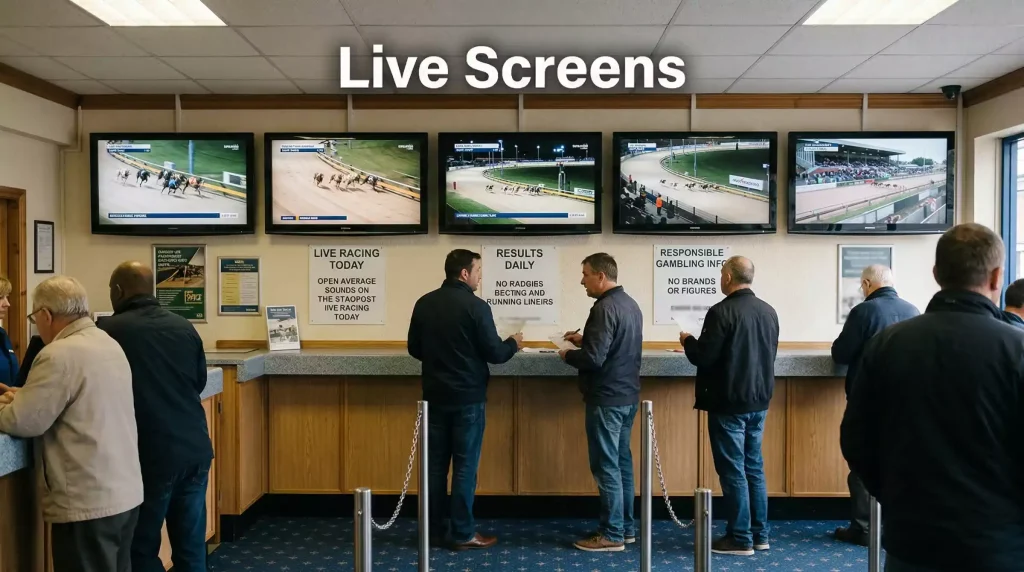
BAGS racing is the engine of daily greyhound racing in the United Kingdom. If you have ever walked into a betting shop and seen dogs running on the screens at two in the afternoon on a Tuesday, you were watching a BAGS fixture. If you have ever placed a bet on an evening card at Romford, Sheffield, or Monmore, you were betting on a BAGS meeting. The system is so embedded in the fabric of the sport that most punters interact with it every day without knowing its name.
BAGS — originally the Bookmakers Afternoon Greyhound Service — is the framework through which the majority of UK greyhound fixtures are organised, funded, and distributed. It connects licensed stadiums with the betting industry, ensuring that there is always live greyhound racing available for bookmakers to offer their customers, morning through evening, across every day of the week. Without BAGS, the fixture list would shrink dramatically, many stadiums would lose their primary source of revenue, and the sport would contract far beyond its current footprint of 18 licensed tracks.
This article explains where BAGS came from, how the schedule works, who controls it, and how it differs from the flagship end of the sport.
Tonight’s cards are listed in the fixture schedule.
BAGS — Origins, Purpose, and How It Works
BAGS began as exactly what its name described: a service that provided greyhound racing for bookmakers during afternoon hours when horse racing was not available. In its early form, the system was relatively modest — a handful of meetings per day, timed to fill gaps in the horse racing calendar and keep betting shops active during otherwise quiet periods. The afternoon slot was key: bookmakers needed content for their customers, and greyhound stadiums needed income beyond their evening gate receipts.
Over the decades, the system expanded far beyond its original afternoon remit. Today, BAGS fixtures run from morning through to the last evening meeting, covering every part of the day. The expansion accelerated significantly after 2018, when The Racing Partnership — a consortium that acquired media rights for several tracks — joined the schedule alongside the established SIS (Sports Information Services) fixtures. The combined output is substantial: up to 74 meetings are now staged every week under the BAGS umbrella, with approximately 5,772 dogs competing across those fixtures in any given seven-day cycle.
The mechanics are straightforward. Bookmakers pay for the right to broadcast live racing from licensed stadiums to their shops and online platforms. That payment, channelled through SIS and The Racing Partnership, provides the stadiums with a guaranteed income stream that is independent of on-course attendance. The stadium runs the meeting, the data feed captures the results, the bookmakers take bets, and the entire loop sustains itself as long as there is sufficient betting volume to make the economics work.
Each BAGS fixture follows a standardised format: 12 races per meeting, spaced at intervals of roughly 15 minutes, with six runners in each race. This uniformity is deliberate — it makes the product easy for bookmakers to schedule, for bettors to follow, and for data platforms to process. A punter switching between a morning meeting and an evening card encounters the same structure, the same number of races, and the same interval timing, regardless of the track or the time of day.
SIS and The Racing Partnership — Who Controls the Schedule?
Two organisations control the scheduling and distribution of BAGS racing in the UK: SIS (Sports Information Services) and The Racing Partnership. Between them, they determine which tracks race on which days, at what times, and through which media channels the races are broadcast to bookmakers and the public.
SIS delivers a minimum of 42 greyhound fixtures every week, with meetings distributed across morning, afternoon, and evening sessions. Their schedule is built around long-term contracts with major bookmakers — including bet365, William Hill, Paddy Power, and Betfred — which guarantee a consistent supply of racing content for those operators’ retail and online platforms. The SIS fixtures are the backbone of the daily greyhound schedule: if you are watching dogs in a betting shop on any given afternoon, it is almost certainly a SIS-distributed meeting.
SIS managing director Paul Witten described the rationale behind the 2026 schedule: “In formulating our streamlined new schedule for 2026, we were focused on delivering for greyhound tracks owned by greyhound people with a shared passion for the sport. We believe our approach is sensible, sustainable, and positive for the industry” (SIS, 2026). The emphasis on sustainability is significant — it reflects an awareness that the fixture list cannot expand indefinitely without diluting the quality of racing and the per-meeting betting turnover that makes the economics viable.
The Racing Partnership operates alongside SIS, holding media rights for a separate group of tracks and distributing their fixtures through its own network. The addition of The Racing Partnership to the BAGS ecosystem in 2018 was the single biggest expansion of the weekly fixture list in modern greyhound racing, taking the total from around 46 meetings per week to the current figure of up to 74. The partnership brought additional tracks into the schedule and created new slots — particularly in the morning and early afternoon — that had previously been unfilled.
For bettors, the practical impact of this dual structure is that the schedule can vary from week to week depending on how SIS and The Racing Partnership allocate their respective fixtures. Tracks may race on different days in different weeks, and the timing of meetings can shift to avoid clashing with other fixtures in the same distribution network. Checking the daily schedule — available through SIS, bookmaker websites, and racing media platforms — is the only reliable way to know exactly which tracks are running tonight.
The wider context is set out in tonight’s greyhound results.
BAGS vs Premier Greyhound Racing — What’s the Difference?
Not all greyhound racing in the UK is BAGS racing. At the top end of the sport sits Premier Greyhound Racing, which governs the flagship events — the competitions with the biggest prize money, the highest-quality dogs, and the most public attention. The distinction between BAGS and Premier is roughly equivalent to the difference between a midweek league fixture in football and a cup final: same sport, same rules, different stakes.
The pinnacle of Premier racing is the English Greyhound Derby, which awards its winner £175,000 — the largest single prize in UK greyhound racing by a considerable margin. The Derby, the Oaks, the St Leger, and a handful of other major competitions form the Premier calendar, staged at selected venues across the year. These events attract the best dogs from the best trainers, and the form lines they produce carry weight far beyond the individual race: a dog that reaches a Derby semi-final has proven its class at a level that no amount of graded BAGS wins can replicate.
BAGS racing, by contrast, is volume-driven. The graded cards that run every morning, afternoon, and evening are designed to keep the betting market supplied with content, not to identify champions. The quality of racing varies with the grade: an A1 BAGS race at a strong track features dogs of genuine ability, while an A8 at a smaller venue is a more modest affair. But the purpose is consistent — competitive, standardised, and frequent enough to sustain the commercial relationship between stadiums and bookmakers.
The two systems coexist because they serve different audiences. BAGS serves the daily bettor who wants action, variety, and the convenience of always having a race to bet on. Premier serves the enthusiast, the trainer with aspirations, and the casual viewer who tunes in for the big occasions. Between them, they cover the full spectrum of UK greyhound racing — from the quiet Tuesday morning card at a Midlands track to the roar of the Derby final under lights. The engine of daily racing and the showcase events that give the sport its profile: both depend on each other, even if they rarely appear on the same card.
