UK Greyhound Track Distances — Sprint, Standard and Stayers Races Explained
 Available in US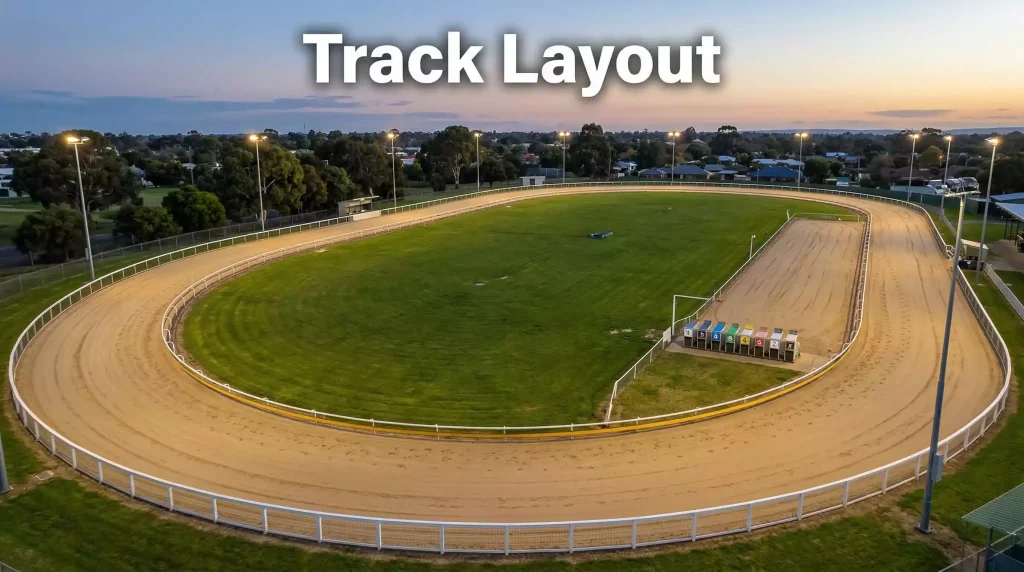
UK greyhound track distances range from explosive sprints of around 260 metres to gruelling marathon trips of 840 metres or more, and the distance a dog races over is one of the most important factors in determining the outcome. A sprinter built for raw acceleration over two bends will not stay a yard beyond its natural range. A stayer bred for endurance will be too slow out of the traps to compete at sprint level. Getting the right distance for the right dog is fundamental to the sport, and understanding how distance categories work is fundamental to reading results and assessing form.
Not every UK track offers the full range of distances. The 18 licensed GBGB stadiums vary in circumference and layout, which means some distances are available at certain venues and not others. A dog whose best form is over 640 metres can only race competitively at tracks that offer that trip, limiting the pool of available races and influencing how trainers plan their dogs’ schedules. Distance is not just a number on the racecard — it shapes the entire racing ecosystem.
Which venue races over what is in the tracks guide.
Sprint, Standard, Middle, and Marathon — What Each Means
Sprint races cover the shortest distances, typically between 260 and 300 metres depending on the track. These are over before most spectators have found their rhythm — two bends, a flat-out dash, and a finish that is often decided by the break from the traps and the first turn. Sprint dogs are the sport’s raw athletes: explosive starters with the acceleration to reach top speed in the opening strides and the pace to maintain it through a single circuit of the track. A slow trapper rarely wins a sprint, because there is not enough distance to recover lost ground.
Standard distance races — roughly 450 to 500 metres, depending on the track — are the backbone of UK greyhound racing. The majority of races on any given evening card are run over the standard trip, which requires two full laps of the track and four bends. Standard-distance racing tests a broader range of qualities than sprints: early pace matters, but so does the ability to hold position through the bends and sustain effort over the final straight. The best standard-distance dogs combine speed with tactical awareness, and their form over this trip is the most widely comparable across the circuit.
Middle distances sit between standard and stayers, typically in the 550 to 630 metre range. Not every track offers a designated middle-distance trip, and where it exists, it often serves as a bridge for dogs that have slightly more stamina than the typical standard runner but fall short of the full stayers’ distance. Middle-distance races can produce excellent betting opportunities, because the field often contains a mix of dogs dropping down from stayers’ trips and others stepping up from the standard, creating genuine uncertainty about who is best suited to the distance.
Stayers’ races cover 640 metres and above, with some tracks offering marathon trips of 840 metres or more. These are the endurance tests of greyhound racing: three or more laps of the track, six or more bends, and a distance that exposes any weakness in stamina or racing intelligence. Stayers tend to be bigger dogs with powerful, ground-covering strides rather than the lighter, quicker builds seen in sprinters. The racing is more tactical than at shorter distances, with dogs jockeying for position through the bends and the outcome often decided in the closing stages rather than the opening strides.
Which Tracks Offer Which Distances
The 18 GBGB-licensed stadiums each offer their own menu of distances, determined by the track’s circumference and the placement of the starting boxes. A larger track like Nottingham’s Colwick Park can accommodate longer stayers’ trips that a smaller circuit like Romford’s simply cannot, because the circumference needed for three full laps at 640 metres requires a certain minimum track size.
Most tracks offer at least two distances: a sprint and the standard trip. The majority also offer a stayers’ option, though the specific distance varies. Romford runs sprints at 225 metres and standards at 400 metres. Sheffield offers distances from sprint through to extended stayers’. Newcastle’s Brough Park and Nottingham’s Colwick Park both accommodate longer trips that suit dogs with genuine stamina. Monmore Green in Wolverhampton is known for its sprint programme, with a 264-metre dash that attracts specialist speed dogs from across the Midlands.
The variation in available distances means that not every dog can race at every track. A stayer that excels over 660 metres at Sheffield may have no equivalent distance available at Romford, which tops out at 575 metres. Trainers plan their dogs’ racing schedules around the distances available at nearby tracks, and the grading secretary at each venue assembles cards based on the pool of dogs registered to race at that stadium. The distance menu shapes everything — which dogs are entered, which races are competitive, and which form lines are comparable between meetings.
For bettors, the practical takeaway is straightforward: always check the distance before comparing form between tracks. A dog that clocked 29.50 seconds over 480 metres at one venue is running a completely different race from one that clocked 29.50 over 500 metres at another. The numbers look similar, but the distances are not the same, the tracks are not the same, and the comparison is misleading without adjustment.
The wider context is set out in tonight’s greyhound results.
How Distance Affects Race Outcomes and Betting
The relationship between distance and trap draw is one of the most underappreciated dynamics in greyhound betting. At sprint distances, the trap draw is critical — the short run to the first bend means that inside-drawn dogs reach the rail before outside runners can cross over, and the race is often decided before the second bend. Trap 1 wins at approximately 18 to 19 per cent across all UK distances, but at sprint level the advantage is typically even more pronounced, because the shorter distance amplifies the geometric benefit of the inside line.
At standard distances, the trap draw remains important but is less decisive. Four bends over two laps give dogs more time to find their running position, and a dog that starts wide but shows strong pace through the middle of the race can overcome an unfavourable draw by the second lap. Form readers assessing standard-distance races should still note the trap, but they should give equal weight to the dog’s mid-race running style and closing speed.
At stayers’ distances, the trap draw matters least. The extended distance means more bends, more opportunities to change position, and more time for class and stamina to assert themselves over the raw advantages of starting position. A dog that breaks slowly from Trap 6 in a stayers’ race has three or four bends to work its way to the rail — a luxury that sprint runners simply do not have. Stayers’ form should be assessed primarily on stamina, pace sustainability, and racing intelligence, with trap draw as a secondary factor.
For betting purposes, distance also affects market predictability. Sprint races tend to produce more upsets, because the short race duration leaves less room for the form book to assert itself — a slightly slow break or a fractional interference on the first bend can change the outcome entirely. Stayers’ races tend to favour form dogs, because the longer distance allows genuine class differences to play out. Standard distances fall in between, which is partly why they produce the most consistently reliable form lines and the most stable betting markets on the card.
