
Greyhound Retirement and Rehoming — What Happens After a Racing Career Ends
 Available in US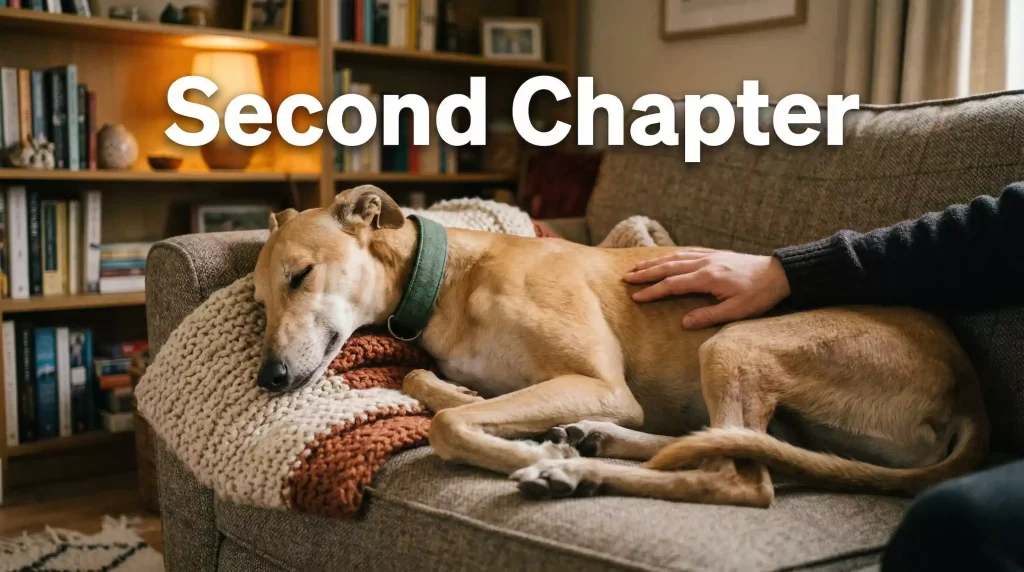
Greyhound retirement and rehoming is the part of the sport that most people never see on a results page but that increasingly defines how the industry is judged. Every year, thousands of greyhounds complete their racing careers and transition into life after the track — the overwhelming majority into private homes, either with their former owners or through dedicated rehoming charities. The numbers have improved dramatically since 2018, and the data now tells a story that is measurably better than it was a decade ago, even if the debate about whether it is good enough continues.
Life after the track is not an afterthought for the sport — it is a metric that regulators, campaign groups, and the public monitor closely. The retirement rate, the rehoming pathways, and the outcomes for dogs that can no longer race are all published annually by the GBGB, and they form one of the most scrutinised datasets in UK greyhound racing. This guide covers what the numbers show, how the rehoming process works, and what anyone considering adopting an ex-racer should expect.
The figures behind it are in welfare in racing.
The Numbers — How Many Greyhounds Retire Each Year
In 2026, GBGB data recorded a retirement rate of 94 per cent across 5,795 greyhounds that left the racing population. That figure represents a significant improvement from 88 per cent in 2018, the year the governing body began publishing comprehensive retirement data in its current format. The upward trend reflects a combination of policy changes, increased welfare funding, and sustained pressure from both inside and outside the industry to account for every dog that finishes racing.
The breakdown of where retired dogs go is instructive. Of the 5,795 that left racing in 2026, 27.1 per cent were retained by their owners or trainers — people who already knew the dog and chose to keep it as a pet or companion. A further 55.8 per cent were rehomed through charities and rehoming organisations, the largest network of which is the Greyhound Trust. The remaining 11 per cent were categorised as “other” — a catch-all that includes dogs returned to breeders, transferred to other care arrangements, or placed through informal networks.
The most striking figure in the retirement data is the number of greyhounds euthanised for economic reasons — meaning put down not because of injury or illness but because no home or place could be found for them. In 2026, that number was three. Three dogs, out of nearly six thousand. In 2018, the equivalent figure was 175. The reduction — 98 per cent over six years — is the single most dramatic welfare improvement the sport has achieved in recent memory, and it reflects both the expansion of rehoming capacity and the industry’s adoption of policies that make economic euthanasia a last resort rather than a routine option.
These numbers do not resolve the wider welfare debate. Critics point out that the 94 per cent retirement figure still leaves 6 per cent — roughly 350 dogs — unaccounted for in the “successful retirement” category, and that the total number of racing-related deaths across all causes remains in the hundreds annually. The data is contested, but it is at least published, and the trend lines are moving in the direction the industry’s defenders claim.
How Rehoming Works — From Track to Home
The rehoming process for a retired greyhound typically begins at the track itself, when a trainer or owner decides that a dog’s racing career is over. The reasons vary: some dogs are retired due to injury, others because they have dropped in grade to a level where competitive racing is no longer viable, and others simply because they have reached the age — usually four or five — where their speed has declined beyond what graded racing demands.
Once a retirement decision is made, the dog is assessed for rehoming suitability. This assessment considers temperament, socialisation, and any medical issues that need addressing before the dog can be placed in a domestic environment. Most retired racers are healthy, well-socialised animals that have been handled daily by kennel staff throughout their careers. The transition from kennel to home is less dramatic than it might sound — these dogs are accustomed to human contact, routine, and being managed in a structured environment.
The Greyhound Trust is the largest dedicated rehoming charity in the UK, operating a network of branches across the country that take in retired racers and match them with adoptive families. The Trust assesses each dog’s personality, exercise needs, and compatibility with children and other pets before placing it with an approved adopter. The process includes a home visit, a trial period, and ongoing support for new owners who may be unfamiliar with the breed’s specific needs.
Other organisations contribute to the rehoming effort alongside the Greyhound Trust. The Retired Greyhound Fund, regional rescue charities, and individual breed-specific rehoming groups all take dogs from the racing pipeline and place them in homes. Some trainers handle rehoming directly, using their own networks to find homes for dogs they have trained and cared for. The system is decentralised but effective — the 55.8 per cent charity placement rate in the 2026 data reflects a rehoming infrastructure that has scaled up substantially since the mid-2010s, when capacity was significantly tighter.
The wider context is set out in tonight’s greyhound results.
Greyhounds as Pets — What New Owners Should Know
The greyhound’s reputation as a pet is one of the sport’s better-kept secrets, and it consistently surprises people who expect a racing dog to be hyperactive, hard to manage, or impossible to keep in a normal-sized home. The reality is almost the opposite. Retired greyhounds are famously calm, affectionate, and low-maintenance — dogs that will happily sleep for 18 hours a day and whose exercise needs are considerably more modest than their racing speed might suggest.
GBGB chief executive Mark Bird has made the point with characteristic directness: “Most people would say that a horse doesn’t end up on your sofa at the end of its racing career” (Gambling Insider) — but a greyhound very often does. The comparison is not flippant: it highlights a genuine difference between the two racing sports. Retired greyhounds are domestic animals that transition to pet life with relative ease, and the breed’s temperament — gentle, quiet, and inclined towards comfort — makes them well suited to homes that might not cope with a higher-energy breed.
New owners should be aware of a few breed-specific considerations. Greyhounds have thin skin and low body fat, which makes them sensitive to cold weather — a coat is not a fashion accessory but a practical necessity during winter walks. Their prey drive, honed through a career chasing a mechanical lure, means that off-lead exercise requires caution, particularly around small animals. Some retired racers adapt quickly to off-lead freedom; others never fully lose the instinct to chase, and a secure, enclosed space is the safest option for exercise.
The adoption process through the Greyhound Trust and other rehoming charities is designed to match dogs with suitable homes, and most organisations provide detailed guidance on the transition period. A retired racer may never have lived in a house, climbed stairs, or encountered a glass door, and the first few days can involve a learning curve on both sides. But greyhounds are adaptable, intelligent animals, and most settle into domestic life within a few weeks. The sofa, as it turns out, is where they were always heading.
