How Greyhound Breeding and Registration Works in the UK — Numbers, Rules and the Irish Pipeline
 Available in US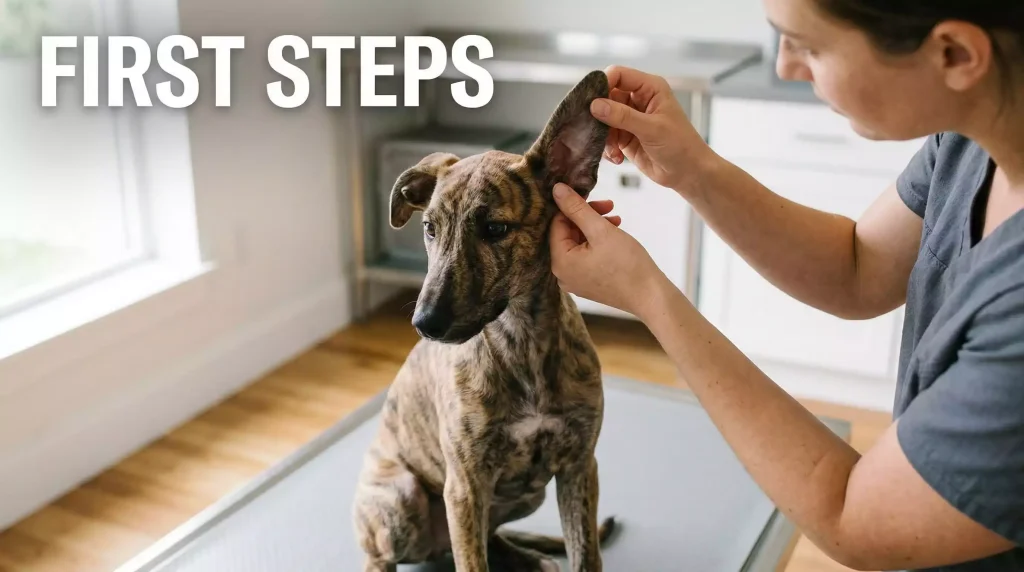
Greyhound breeding and registration in the UK follows a pipeline that most bettors never think about but that shapes every race they watch. The majority of greyhounds competing on licensed UK tracks were not born in Britain — they were bred in Ireland, raised on Irish farms, and imported to the UK as young dogs ready to begin their racing careers. This cross-border supply chain has been the dominant model for decades, and the registration data published by GBGB confirms that the Irish connection is not a minor footnote but the foundation of the entire racing population.
Understanding how dogs move from litter to track — how they are bred, identified, registered, and entered into the UK system — provides context for the numbers you see in results tables every night. The registration process determines which dogs are eligible to race, the declining trend in registrations signals broader shifts in the sport’s scale, and the Irish pipeline explains why a shrinking industry still has enough dogs to fill race cards across 18 stadiums.
Where those dogs end up is in retirement and rehoming.
How a Greyhound Gets Registered for UK Racing
Before a greyhound can race at any GBGB-licensed stadium, it must be registered with the governing body. The registration process is designed to establish the dog’s identity beyond doubt, using a combination of physical marking and documentation that creates a permanent record linking a specific animal to a specific racing name.
The primary identification method is the ear tattoo. Every racing greyhound is tattooed in both ears shortly after birth, with a unique combination of numbers and letters that serves as its lifelong identifier. The left ear typically carries the litter identification — a code linking the dog to its dam and sire — while the right ear carries an individual number. This system predates microchipping and remains the standard in greyhound racing, though microchips are increasingly used as a supplementary identification method.
To register with GBGB, a greyhound’s ownership must be documented, its breeding recorded, and its identity verified against the ear tattoo. The process generates a registration card — the dog’s official passport within the UK racing system — which confirms its name, ownership, breeding, and identification details. Without this registration, a dog cannot be entered in a race at any licensed stadium. The system ensures traceability: every dog that appears on a UK racecard can be traced back through the registration to its birth, its breeder, and its ownership history.
For Irish-bred dogs entering the UK system, the registration process includes verification against records held by Rásaíocht Con Éireann (formerly the Irish Greyhound Board), which maintains its own parallel registration database. The transfer between the two systems is routine — it happens thousands of times a year — but it requires documentary evidence that the dog’s identity and breeding are consistent across both jurisdictions.
Registration Numbers — A Declining Trend
The number of new greyhounds registered for UK racing has been falling consistently. In 2023, GBGB registered 5,899 new greyhounds — a decline of 19 per cent compared to 2019 levels. The trend is not cyclical; it has been moving in one direction for several years, reflecting the broader contraction of the sport’s infrastructure and the shrinking of the racing population.
The decline in registrations mirrors the decline in the number of active stadiums. Fewer tracks mean fewer fixtures, fewer fixtures mean fewer race entries required, and fewer entries mean less demand for new dogs. The closure of Crayford, Perry Barr, and Swindon in 2026 removed three venues from the circuit, each of which had generated demand for graded racing dogs. With those tracks gone, the racing population needed to fill cards at the remaining 18 stadiums is smaller than it was five years ago.
The registration decline also reflects changes in the economics of breeding. Producing a racing greyhound is not cheap: breeding, rearing, early training, and transport to the UK all involve costs that must be recouped through prize money and sales. As prize funds have come under pressure — a consequence of falling levy income and tightening economics across the sport — the financial incentive to breed new dogs has diminished. Breeders, particularly in Ireland, respond to market signals like any other producers: when demand falls and margins tighten, output follows.
For form analysts and bettors, the declining registration trend has a practical implication. A smaller pool of active racing dogs means more familiar names appearing on racecards, more repeat matchups within grading pools, and — potentially — less competitive racing in lower grades where the depth of available dogs is thinnest. When the population contracts, the strongest dogs still fill the upper grades, but the lower tiers become shallower, and the results can become more predictable as a consequence.
The wider context is set out in tonight’s greyhound results.
The Irish Connection — Where UK Racing Dogs Come From
More than 80 per cent of greyhounds racing in the UK are imported from Ireland, with approximately 6,000 dogs making the crossing each year. This makes the Irish breeding and training industry the primary supplier of talent for the British circuit — a relationship that has existed for decades and shows no sign of reversing.
The reasons for Ireland’s dominance are structural. Ireland has a larger greyhound breeding industry relative to its population than any other country, with established farms, an experienced workforce, and a cultural affinity for the breed that sustains production at a scale Britain alone could not match. The regulatory framework in Ireland, managed by Rásaíocht Con Éireann, supports a pipeline that produces thousands of racing-quality dogs annually, many of which are specifically bred and reared for export to the UK market.
The import pipeline works through a combination of direct sales and trainer networks. UK trainers buy dogs from Irish breeders — sometimes at public sales, sometimes through private transactions — and bring them to their kennels for schooling and trialling before entering them in the UK racing system. The dogs arrive as young adults, typically between 15 and 24 months old, and begin their racing careers after a period of acclimatisation to the UK tracks and conditions.
The dependency on Irish imports creates a vulnerability that the UK industry acknowledges but has not resolved. Any disruption to the Irish supply chain — whether through regulatory changes in Ireland, shifts in Irish breeding economics, or transport complications — would have an immediate impact on the availability of dogs for UK racing. The 6,000 annual imports are not a supplementary source; they are the core of the racing population. From litter to track, the journey that most UK racing greyhounds take begins on the other side of the Irish Sea.
