
Hove Greyhound Results Tonight — Brighton & Hove Stadium Races and Stats
Best Greyhound Betting Sites – Bet on Greyhounds in 2026
Loading...
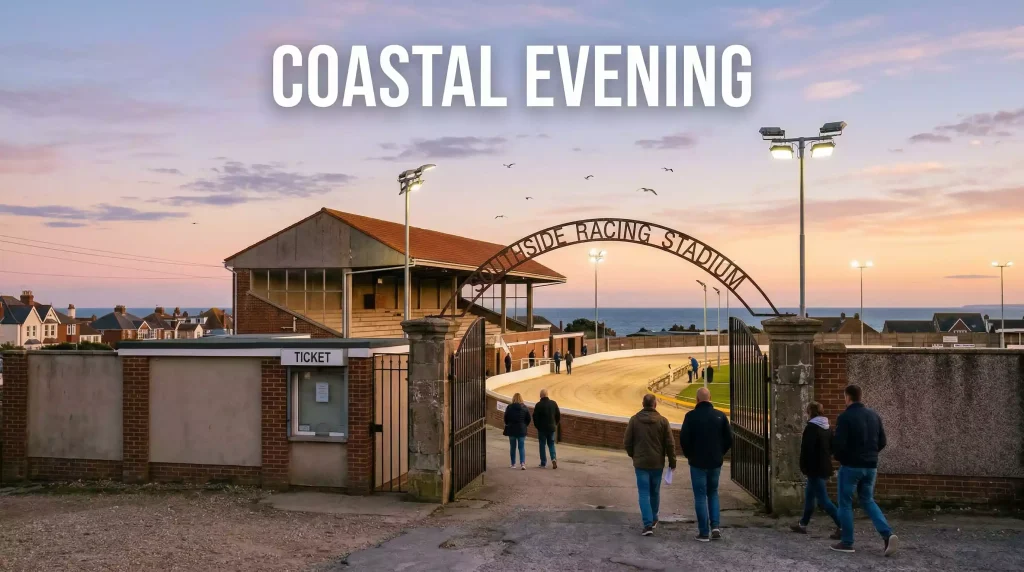
Hove greyhound results tonight come from Brighton and Hove Stadium, the south coast’s principal greyhound venue and one of the few tracks in the UK that can claim a genuinely seaside location. The stadium sits in Hove, just west of central Brighton, and its proximity to one of England’s most visited coastal cities gives it a character that most inland tracks simply cannot match.
Hove has been racing greyhounds since the mid-twentieth century, and while the sport’s footprint has contracted dramatically over that period — from 77 tracks in 1947 to 18 licensed by the GBGB today — this stadium has endured. Its survival owes something to its catchment area, which draws from Brighton, Hove, and the broader Sussex commuter belt, and something to its fixture schedule, which keeps the track active on the BAGS circuit throughout the week.
Tonight’s results from Hove will contain all the standard elements: winners, finishing times, SPs, forecast and tricast dividends, going, and race comments. What makes these results worth reading with Hove-specific knowledge is the track’s layout, its bends, and the form patterns that emerge when you factor in how the south coast racing surface behaves.
Brighton & Hove Stadium — Layout and Race Programme
Brighton and Hove Stadium operates on a standard oval circuit with four bends, offering races over sprint, standard, and middle distances. The core programme runs over approximately 285 metres (sprint), 515 metres (standard), and 695 metres (stayers), with the standard distance accounting for the majority of races on any given evening. The sprint trip is short and explosive — two or three turns of the track at most — while the stayers’ distance demands sustained pace across three full circuits.
The track surface is sand-based, in line with virtually all UK greyhound venues. Hove’s coastal location introduces a variable that inland stadiums do not have to deal with: sea air carries moisture, and the proximity to the English Channel means that ambient humidity can affect how the surface plays, particularly during autumn and winter evening meetings. The going at Hove can shift from “normal” to “wet fast” or “slow” more readily than at a landlocked venue, and experienced Hove bettors learn to check the going declaration with extra care before the first race.
Race nights are scheduled within the broader BAGS and SIS framework, with Hove typically running evening meetings on selected weekday nights. The exact days can shift from week to week depending on the national schedule, but the pattern usually includes at least two or three meetings per week. First race times for evening cards are generally around 19:00, with the card running through to approximately 22:00 across the standard 12-race programme.
The stadium itself retains a slightly old-school feel — more characterful than modern, with facilities that are functional rather than flashy. For visitors, this is part of the appeal. Hove does not try to be a corporate entertainment venue; it is a working greyhound track with a loyal local following and a straightforward atmosphere. If you are watching the racing in person rather than following results remotely, the experience is intimate and unpretentious, with the dogs close enough to the stands that you can feel the ground shake when the pack rounds the first bend.
What Hove’s Evening Card Looks Like
An evening card at Hove follows the same structure as every other BAGS fixture across the UK: 12 races, six runners per race, spaced at intervals of roughly 15 minutes. SIS coordinates a minimum of 42 fixtures every week across the licensed circuit, and Hove’s meetings slot into that national schedule alongside cards at other venues running concurrently during the evening session.
The majority of tonight’s races will be graded, typically spanning the range from A2 or A3 down to A7 or A8. The precise grades depend on which dogs are available and how the grading secretary has balanced the card, but the principle is consistent: each race matches runners of roughly equivalent proven ability, creating competitive fields without lopsided mismatches. For bettors, graded Hove racing tends to produce reliable form lines — dogs stay in their grade range for several runs, and recent results at the same track and distance are usually the most informative data points available.
Open races and special events appear on the Hove card less frequently than at major venues like Nottingham or Newcastle, but they do feature periodically, especially around bank holidays or during the summer months when footfall is higher. These races attract a broader pool of dogs and often carry enhanced prize money, which lifts the quality above the standard evening fare. When they do appear on the card, the form book needs reading with a different lens: open-race form reflects class rather than consistency, and the gap between the best and worst runner in the field can be wider than in a well-graded A4.
Track Traits and Form Tips for Hove
Hove’s track geometry sits somewhere between the tighter circuits of venues like Romford and the more expansive layouts of Nottingham or Newcastle. The bends are moderately sharp — tight enough that inside runners carry a meaningful advantage, but not so tight that a wide-running dog with genuine pace is automatically eliminated from contention. The run to the first bend from the traps is of moderate length, giving all six runners a reasonable chance to find their line before the first turn arrives.
Trap bias at Hove follows the broad UK pattern: Trap 1 wins more often than the theoretical one-in-six probability would predict. Across the national circuit, Trap 1 carries a win rate of approximately 18 to 19 per cent, and Hove sits close to that average. The inside advantage is real but not overwhelming, which means that outside-drawn dogs with strong early pace or a proven ability to lead from wide traps should not be dismissed on trap draw alone. The key question with any Hove runner is whether it can reach the first bend with a clear run — and the race comments from previous outings at this track are the best evidence you have.
Surface conditions add another layer. Hove’s coastal climate means the track can be faster on dry, breezy evenings and heavier when damp sea air settles over the stadium. Dogs that posted quick times at Hove a fortnight ago on “normal” going may find the surface less helpful on a “slow” night, and vice versa. Comparing raw finishing times without factoring in the going is a common pitfall at any track, but it is especially misleading at a venue where weather conditions fluctuate more than average. Always check the going before placing the numbers in context.
For anyone building a form picture for tonight’s Hove card, the approach is straightforward: prioritise recent results at this track and distance, check the trap draw against the dog’s running style, and note the going declaration before comparing times. South coast racing has its own rhythm, and the more results you read from Brighton and Hove, the better you become at spotting the patterns that the numbers alone do not quite reveal.