Perry Barr Greyhound Stadium — History, the English Derby, and the 2026 Closure
 Available in US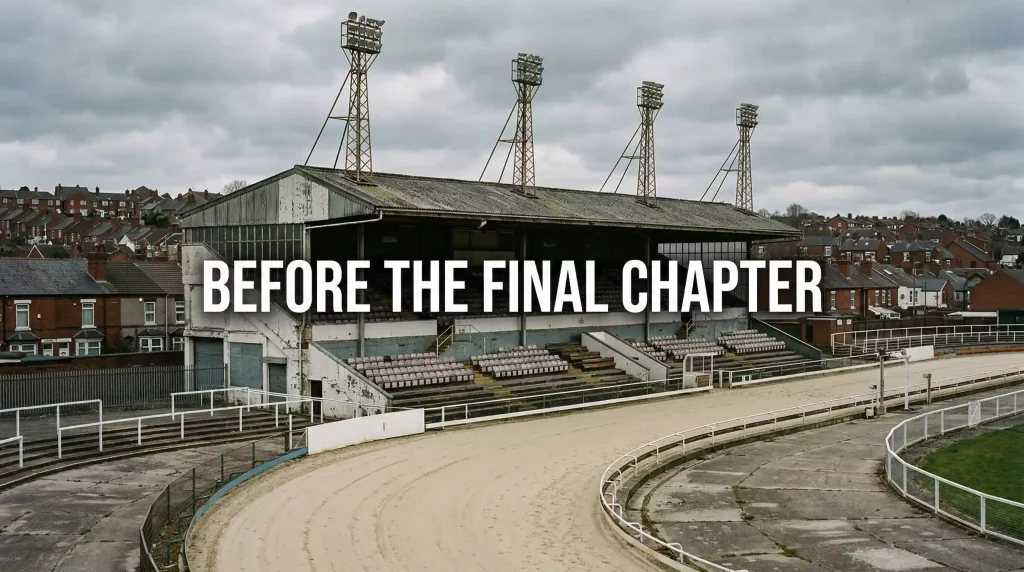
Perry Barr greyhound stadium was Birmingham’s racing heartbeat for the best part of a century — the venue where the English Greyhound Derby found a long-term home, where generations of Brummies spent their Friday nights, and where some of the fastest dogs in British racing history crossed the line in front of crowds that gave the sport its noise and its soul. In 2026, the stadium closed, and the heartbeat stopped.
The closure of Perry Barr was not a sudden shock. The stadium’s future had been uncertain for years, caught between the commercial pressures of declining attendance, rising land values, and the broader contraction of the UK greyhound circuit. But the finality of it — the last race, the last crowd, the gates shutting for good — hit the Birmingham greyhound community harder than the spreadsheets predicted. This article looks back at what Perry Barr meant, why it closed, and what it left behind.
The other stadium lost recently is Crayford.
Perry Barr’s Place in Greyhound Racing History
Perry Barr opened in 1928, just two years after the first modern greyhound race was staged at Belle Vue in Manchester. It was among the earliest purpose-built greyhound stadiums in the country, and it quickly established itself as one of the premier venues in the Midlands. By the 1930s, the stadium was drawing substantial crowds and hosting competitive racing that attracted top-class dogs from trainers across England.
The stadium’s defining association was with the English Greyhound Derby — the sport’s most prestigious competition. Perry Barr became the Derby’s long-term home, hosting the event for decades and embedding the race in the identity of both the stadium and the city. The Derby final at Perry Barr was the one night of the year when greyhound racing broke out of its niche and attracted national attention: television cameras, broadsheet coverage, and a crowd that swelled beyond the regular Friday-night audience. The winner’s prize of £175,000 made it the richest race in British greyhound racing, and the prestige of winning at Perry Barr carried weight that no other venue could replicate.
Beyond the Derby, Perry Barr hosted a regular programme of BAGS and open racing that kept the stadium active throughout the week. The track’s standard distance, its grading pool, and its evening fixture schedule made it a dependable part of the Midlands racing circuit — a venue where trainers could run dogs regularly and bettors could follow form with confidence. For local punters, Perry Barr was not just the Derby — it was the Tuesday night card, the Saturday evening meeting, the familiar track where you knew the bends and the traps and the going.
The stadium also held significance within the wider history of UK greyhound racing. Perry Barr was operating during the sport’s golden era — the post-war decade when greyhound racing attracted tens of millions of spectators annually and stadiums across Britain were packed to capacity on race nights. As the sport contracted through the second half of the twentieth century, losing tracks to redevelopment and declining audiences, Perry Barr remained. It adapted to the BAGS system, embraced televised coverage, and kept its doors open through economic downturns, social change, and the relentless erosion of the stadium circuit around it. That resilience made the eventual closure all the more jarring — if Perry Barr could not survive, it raised uncomfortable questions about which tracks could.
The wider context is set out in tonight’s greyhound results.
The 2026 Closure — Why and What Happened Next
Perry Barr was one of three UK greyhound stadiums to close in 2026, alongside Crayford in Kent and Swindon in Wiltshire. The centenary year of British greyhound racing — which should have been a moment of celebration — became instead a year of contraction, with one new stadium opening at Dunstall Park and three others shutting permanently. The net loss of two tracks reduced the licensed circuit to 18 GBGB stadiums.
The reasons behind Perry Barr’s closure echoed those that have driven track closures across the UK for decades: the land was worth more as development than as a sports venue, attendance had declined from its peak levels, and the revenue from BAGS fixtures and gate receipts was insufficient to justify continued operation in the face of alternative uses for the site. The decision was commercial, but the impact was cultural — a venue that had hosted the Derby and served the Birmingham community for nearly a century was gone.
The transition was managed, in part, by the opening of Dunstall Park Greyhound Stadium in Wolverhampton — the first new-build greyhound venue in the UK in over a decade. Dunstall Park was positioned as Perry Barr’s replacement, absorbing the Derby and other flagship competitions that had previously been staged in Birmingham. The early signs were encouraging: the Premier Greyhound Racing Oaks final at Dunstall Park in 2026 drew 324 per cent more spectators than the same event had attracted at Perry Barr the previous year. Whether that growth reflected novelty or a genuine shift in audience engagement remained to be seen, but the numbers gave the new venue a strong start.
For the trainers and dogs that had raced regularly at Perry Barr, the closure meant adjustment. Dogs needed to be re-entered at other tracks, grading pools shifted, and the logistics of travelling to Dunstall Park or other Midlands venues replaced the convenience of a local Birmingham stadium. The disruption was manageable but real — another chapter in the long story of UK greyhound racing adapting to a shrinking footprint.
Perry Barr’s Legacy — What It Meant for Birmingham
Perry Barr’s legacy is not measured in race times or dividend records. It is measured in the generations of Birmingham families who spent their evenings at the dogs, in the trainers who built their careers around the stadium, and in the cultural role that the venue played in a city where working-class sport has always mattered.
The stadium was a community institution in the truest sense. It was the place where people went after work on a Friday, where birthdays and stag nights were celebrated trackside, where the rhythms of the racing calendar marked the passing of the year as reliably as any civic event. The Derby final was the highlight, but the ordinary Tuesday evening card — six hundred people in the stands, twelve races on the card, a pie and a pint between bets — was the fabric of the place.
Birmingham is not short of sporting heritage. Villa Park, St Andrew’s, Edgbaston — the city has venues with deeper histories and larger followings. But Perry Barr occupied a different niche: accessible, affordable, and informal in a way that the big-ticket sports could not match. You did not need a season ticket or a premium membership. You walked in, paid at the gate, and spent the evening in the stands with people who were there for the same reason — a few hours of live sport, a modest gamble, and the shared excitement of watching six dogs tear around a track at forty miles an hour.
Its closure leaves a gap that Dunstall Park may eventually fill, but the geography is different, the community is different, and the memories belong to Perry Barr alone. Birmingham’s racing heartbeat has moved to Wolverhampton. Whether it beats with the same rhythm is a question that only time — and the crowds — will answer.
