Sheffield Greyhound Results Today — Latest Races From Owlerton Stadium
Best Greyhound Betting Sites – Bet on Greyhounds in 2026
Loading...
Sheffield greyhound results today come from Owlerton Stadium, one of the longest-established and most active tracks in the north of England. Greyhound racing has been held at Owlerton since January 1932, when 10,000 spectators turned up for the very first meeting, making it one of the few venues that can trace its history back close to the sport’s earliest years in Britain. The stadium itself was built in 1929 — originally for speedway — and it remains a central fixture on the BAGS schedule nearly a century later.
The stadium sits in the Owlerton area of Sheffield, a short drive from the city centre, and is operated by A & S Leisure Group. Sheffield’s media rights are handled through a deal with Arena Racing Company (ARC), the largest greyhound and horse racing media operator in the UK. Sheffield’s place in the northern circuit is significant: alongside Newcastle and Sunderland, it forms part of a triangle of tracks that serves the betting and on-course audience across Yorkshire and the North East. Owlerton’s finest nights draw crowds that reflect genuine local enthusiasm for the sport, not just the passing interest of a casual evening out.
Today’s results from Sheffield follow the standard format: winners, finishing times, starting prices, dividends, and race comments for every runner. What makes Sheffield worth understanding in its own right is the track’s layout, the distances it offers, and the form patterns that emerge from a stadium where the going and the geometry create their own set of biases.
Owlerton Stadium — Distances, Layout, and Race Nights
Owlerton Stadium offers racing over several distances, with the standard trip sitting at around 480 metres — two full laps of the track. Sprint races are run over shorter distances for the speed specialists, while stayers’ events stretch to 660 metres or beyond, testing stamina and the ability to maintain pace through three or more bends. The variety of distances is one of Owlerton’s strengths: it accommodates different types of dog on the same card, which keeps the racing mixed and the form analysis interesting.
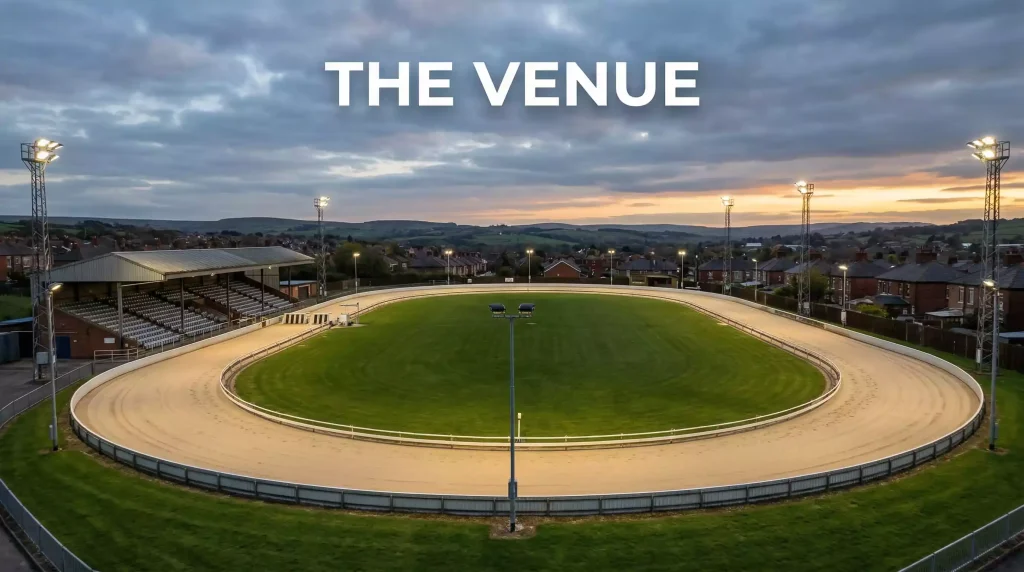
The track surface is sand, consistent with the majority of UK stadiums, and the circuit itself is a standard oval with four bends. Owlerton’s bends are moderately sweeping — not as tight as Romford’s, but tighter than the broader turns at Nottingham’s Colwick Park. This middle-ground geometry means that neither pure inside runners nor wide-running dogs have an overwhelming advantage, though early pace and a clean run to the first bend still matter more than most punters give them credit for.
Race nights at Sheffield typically fall on Tuesday, Friday, and Saturday evenings, with additional daytime meetings on Tuesday, Thursday, and Sunday. The schedule can shift depending on the SIS programming and track availability. The multi-meeting pattern gives Sheffield a substantial fixture density, producing well over 50 races per week when the full schedule is running. Evening first race times usually kick off between 18:00 and 19:30 depending on the day, wrapping up before 22:00.
The stadium itself has undergone periodic investment under ARC’s ownership, maintaining the facilities that serve both the betting audience watching from home and the on-course crowd. Sheffield’s evening meetings have a noticeably different atmosphere to the daytime BAGS cards: louder, busier, and with a palpable sense that the people in the stands are there because they want to be, not just because they happened to be passing a betting shop.
What Today’s Sheffield Card Looks Like
Today’s Sheffield card will follow the structure common to all BAGS fixtures: 12 races, each with six runners, spaced at intervals of roughly 15 minutes. The BAGS system — which now facilitates up to 74 meetings per week across UK tracks with nearly 5,772 dogs competing weekly — ensures that Sheffield’s card is part of a broader national schedule coordinated to minimise overlap between venues and maximise coverage across the betting day.
The majority of races on a Sheffield card are graded — typically ranging from A1 down to A7 or A8, depending on the pool of dogs available. Grading ensures competitive balance: each race matches dogs of roughly similar proven ability, which is why results at graded meetings tend to be more predictable than open events where class gaps can produce lopsided finishes. A well-graded A3 race at Sheffield, with six dogs whose recent form is tightly clustered, can be far harder to call than an open race featuring one obvious class act and five outsiders.
Open races and special events do appear on the Sheffield card periodically, particularly on Saturday evenings when the schedule allows for higher-profile competitions. These races attract better dogs and bigger prizes, and they tend to draw larger on-course crowds. For form analysts, the distinction between graded and open races matters because the data reads differently: graded form is a guide to consistency, while open form is a guide to ceiling.
Sheffield-Specific Form Factors
Sheffield’s track characteristics create form patterns that do not always transfer to other venues, and understanding those patterns is one of the edges available to anyone who specialises in Owlerton results.
The stayers’ distance is one area where Sheffield stands out. Not every UK track offers a competitive stayers’ programme, and Owlerton’s longer races attract dogs specifically suited to the distance — dogs with stamina, tactical awareness, and the ability to handle three or four bends without losing position. Stayers’ form at Sheffield is its own subset: a dog that excels over 660 metres here may not replicate that performance at a track with different bend geometry or a shorter run to the first turn. When reading Sheffield results, always check the distance before drawing conclusions about a dog’s overall ability.
Outside runners — dogs drawn in Trap 5 or Trap 6 — have a slightly better showing at Owlerton than at tighter tracks like Romford, largely because the bends are wide enough to accommodate a dog running a wider arc without losing as much ground. This does not mean outside traps are favoured — the inside still carries an advantage at most UK stadiums — but the gap between inside and outside is narrower at Sheffield than at venues where the bends are sharper. Paying attention to a dog’s trap record and whether it runs rail or wide is more useful here than simply assuming inside equals best.
Arena Racing Company reported a 5 per cent increase in greyhound attendance across its venues in 2026, and Sheffield — through its ARC media rights deal — has been part of that uptick. As ARC’s marketing and communications manager Sarah Newman noted: “Competition for the leisure pound has never been higher, so to grow our footfall in 2026 is a great achievement” (Greyhound Weekly, 2026). Sheffield’s Saturday night meetings in particular benefit from this — a combination of competitive racing, reasonable admission prices, and a social atmosphere that casual visitors find genuinely enjoyable.
For bettors, the practical takeaway is that Sheffield form should be read with track context in mind. A finishing time over 480 metres means one thing here and something slightly different at Nottingham or Hove. A trap draw carries its own weight depending on the distance. And a dog’s running style — whether it leads, tracks, or finishes — interacts with Owlerton’s geometry in ways that only become visible when you study enough Sheffield results to spot the recurring patterns. The data is there in every set of results. The challenge, as always, is reading it with the right track in mind.